
When Your Garage Door Spring Says Goodbye: Warning Signs You Can’t Ignore
The morning rush is real. You press the garage opener, hear an alarming bang, and suddenly your door refuses to budge. For thousands of homeowners each year, this scenario marks the dramatic end of a garage door spring’s lifespan. But here’s what most people don’t know: your spring was probably trying to tell you it was struggling for weeks, maybe even months, before that final failure. At Prosper Garage Door Repair, we’ve seen countless preventable spring failures that could have been caught early, saving homeowners both stress and money.
Garage door springs don’t just fail randomly. These hardworking components cycle through thousands of opening and closing operations, enduring incredible tension with each movement. The average torsion spring is rated for about 10,000 cycles, which translates to roughly seven to nine years for most families. Understanding the warning signs means you can address problems on your schedule rather than dealing with an emergency when you’re already running late.
The Sound of Trouble
Your garage door shouldn’t sound like it’s auditioning for a horror movie soundtrack. When springs begin to wear down, they often announce their distress through increasingly noticeable sounds. A properly functioning garage door operates with a smooth, relatively quiet hum. Once you start hearing grinding, scraping, or squeaking noises during operation, your springs are likely experiencing uneven wear or losing their tension capability.
The most dramatic sound is the loud bang or pop that occurs when a spring finally breaks. This noise can be startling enough to wake you from sleep, and it happens because the tightly wound spring releases all its stored tension in an instant. If you’re hearing any unusual sounds during normal operation, you’re getting an early warning system that shouldn’t be ignored.
Visible Changes in Door Behavior
Watch how your garage door moves. A door with failing springs struggles to maintain consistent speed and often appears jerky or uneven as it travels along the tracks. You might notice that one side moves faster than the other, creating a crooked appearance mid-operation. This imbalance puts additional stress on your garage door opener and can lead to more expensive repairs down the road.
Another telling sign is a door that feels heavier than usual when operating manually. Springs do the heavy lifting, literally. When they begin to fail, you’ll feel more resistance when pulling the emergency release and attempting to lift the door by hand. A properly balanced door should move smoothly with minimal effort. If you’re straining to lift it, or if it comes crashing down when you let go, your springs are no longer doing their job effectively.
Physical Spring Deterioration
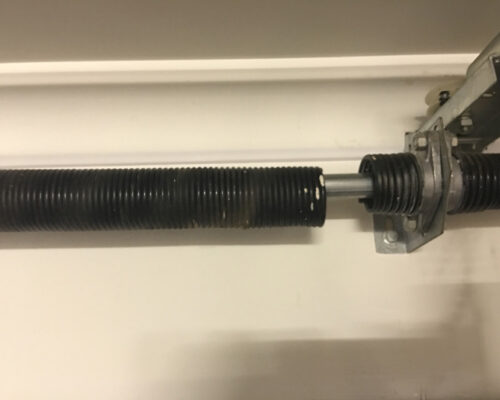
Sometimes the evidence is right there in front of you. Torsion springs mounted above your garage door can show visible signs of wear including gaps or separation in the coils, rust accumulation, or physical stretching. Rust is particularly concerning because it creates friction and weakens the metal, accelerating the spring’s deterioration. Extension springs, which run along the sides of your door, may appear stretched out or show visible damage to the safety cables that run through them.
A gap in the spring coils is especially critical. This separation indicates the spring has lost significant tension and is likely close to complete failure. Once you spot this gap, the spring could break at any time.
Taking Action Before Crisis Strikes
Recognizing these warning signs gives you the advantage of planning ahead. Spring replacement is considerably more manageable when scheduled in advance rather than handled as an emergency repair. The risks of continuing to operate a garage door with failing springs extend beyond inconvenience—springs under extreme tension can cause serious injury if they break during operation, and a falling garage door poses significant safety hazards.
Prosper Garage Door Repair specializes in professional spring replacement that prioritizes your safety and gets your garage door functioning smoothly again. When you notice any of these warning signs, scheduling an inspection means you stay in control of the situation. Our experienced technicians can assess your springs, explain exactly what’s happening, and provide solutions that fit your timeline and budget. Don’t wait for the dramatic failure—reach out to us today and keep your garage door reliable for years to come.